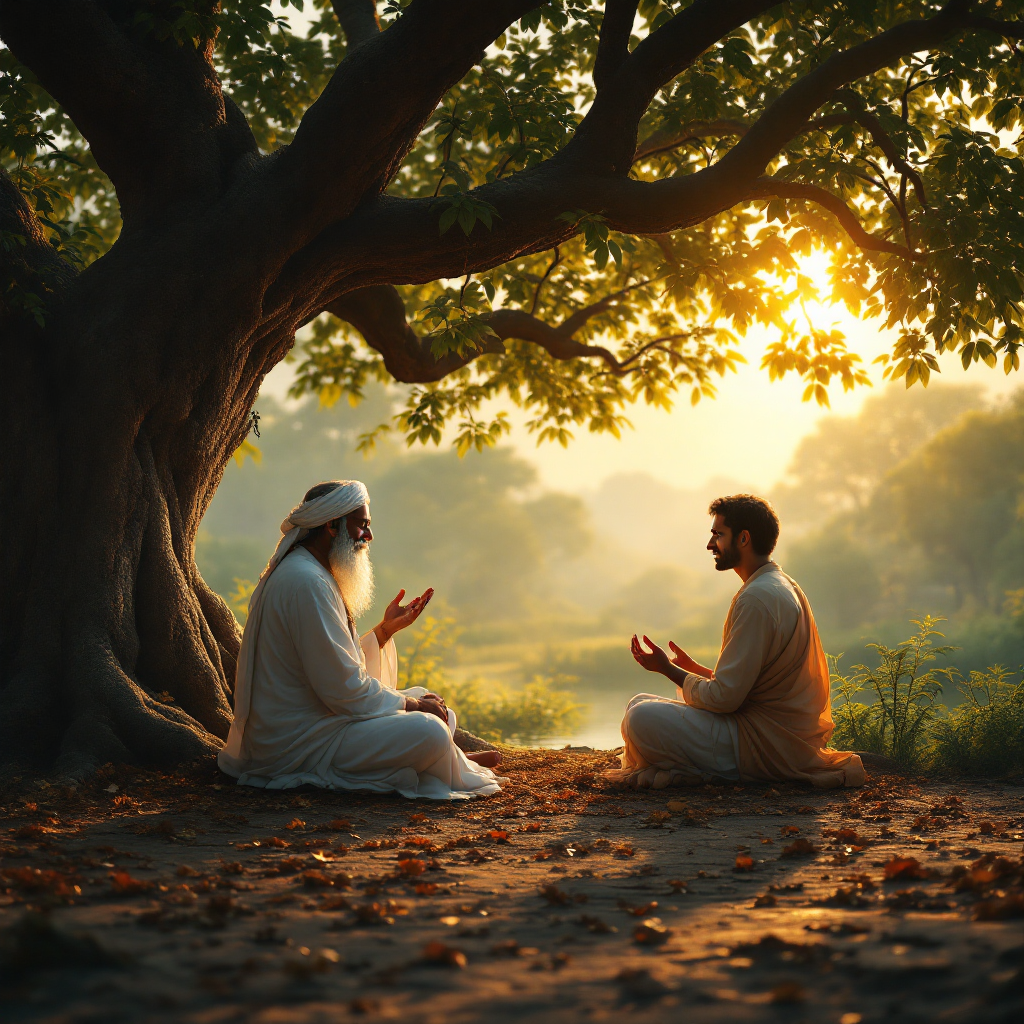
🧘 Ancient Spiritual Practices
Timeless techniques from sacred scriptures for Self-realization, inner peace, and spiritual awakening
Important: The Need for a Qualified Guru
These ancient practices are powerful and must be approached with respect and proper guidance. While the information provided here offers an introduction, many of these techniques—especially advanced pranayama (breath retention, Bhastrika, Kapalabhati), kundalini practices, and deep meditation—can have adverse effects if practiced incorrectly without proper preparation and supervision.
The traditional scriptures emphasize the absolute necessity of learning from a sat-guru (realized teacher) who can:
- • Assess your physical, mental, and spiritual readiness for each practice
- • Provide personalized instruction adapted to your unique constitution and circumstances
- • Correct subtle mistakes in technique that can lead to imbalances or harm
- • Guide you through challenges, obstacles, and spiritual experiences that arise
- • Ensure proper sequencing and progression from basic to advanced practices
"Just as milk must be received in a clean vessel, spiritual knowledge must be received from a pure guru. Without proper transmission, what should liberate can bind; what should heal can harm." — Traditional Yogic Wisdom
Begin with simple, safe practices like breath awareness, basic meditation, and self-inquiry. For advanced techniques involving breath retention, bandhas, or intense practices, seek out a qualified teacher in person. Your safety and spiritual progress depend on it.
Silent Sitting
Daily Practice Timer
Establish a daily meditation practice. Stillness is the gateway to the infinite.
Self-Inquiry
Ramana Maharshi
Direct investigation: "Who Am I?" - The royal path to Self-realization
Ashtanga Yoga
Patanjali Yoga Sutras
Eight-limbed path to samadhi and liberation
Pranayama
Hatha Yoga Pradipika
Sacred breath control techniques for vital energy
Kundalini Yoga
Serpent Power Awakening
Ancient practices to awaken dormant spiritual energy
Jnana Yoga
Upanishads
Path of knowledge through discrimination and wisdom
Bhakti Yoga
Bhagavad Gita
Path of devotion and surrender to the Divine
Karma Yoga
Bhagavad Gita
Selfless action as offering to the Supreme
Mantra Japa
Sacred Sound Repetition
Transform consciousness through the power of divine names and mantras
Yoga Nidra
Yogic Sleep
Conscious deep sleep — the most powerful relaxation technique known
Trataka
Steady Gazing
One-pointed concentration through flame gazing — a Shatkarma practice
Seva
Selfless Service
Dissolve the ego through devoted service to all beings as God
Mudras & Bandhas
Energy Seals & Locks
Redirect prana through sacred gestures and energetic locks
Svadhyaya
Sacred Study & Self-Reflection
Contemplative study of scripture as a direct path to Self-knowledge
Mauna
Sacred Silence
The practice of silence — turning speech inward to discover the Witness
Nada Yoga
Yoga of Sound
Attain samadhi through the inner sound — the unstruck melody of the cosmos
Silent Sitting Practice
Daily Meditation Timer
Stillness is the gateway to the infinite. In silence, the mind settles, and the truth of your being shines forth.
"Just be. Nothing to do, nothing to achieve."
Silent Sitting
"Just be. Nothing to do, nothing to achieve."
Begin Your Day
Morning meditation sets the tone. Even 10 minutes can transform your day.
Build Consistency
Same time, same place. Let it become as natural as breathing.
Evening Reflection
Close your day in silence. Release what was, rest in what is.
Self-Inquiry (Atma Vichara)
Ramana Maharshi • Direct Path to Self-Realization
Self-Inquiry is the most direct method to realize one's true nature. Taught by Ramana Maharshi, this practice doesn't rely on beliefs, rituals, or complex techniques. It is simply the investigation into the fundamental question: "Who am I?"
Unlike other practices that gradually purify the mind or develop concentration, Self-Inquiry cuts directly to the root of ignorance by questioning the very existence of the separate self. When the inquiry is deep enough, the false "I"-thought dissolves, revealing the ever-present Self.
The Core Practice
The Question: "Who Am I?" (Ko'ham in Sanskrit)
When any thought, emotion, or sensation arises, immediately ask: "To whom does this appear?" The instant answer is "To me." Then turn the attention inward and ask: "Who is this 'me'? Who am I?"
This inquiry should not be an intellectual search for an answer. Instead, it directs your attention to the source of the "I"-thought—the sense of being a separate individual.
The Key: Don't try to answer the question with the mind. Let the question itself dissolve the questioner by turning attention back to its source.
Step-by-Step Process
- 1. Sit comfortably in a quiet place. Close your eyes or keep them soft.
- 2. Become aware of the present moment and the sense of "I am" or "I exist."
- 3. When a thought arises (like "I am hungry" or "I am anxious"), ask: "To whom does this thought appear?"
- 4. The answer comes naturally: "To me."
- 5. Then inquire: "Who am I?" or "What is this 'I'?"
- 6. Don't answer with the mind. Instead, feel into the source of this "I"-feeling.
- 7. Rest your attention on the "I"-thought itself, watching it dissolve.
- 8. Remain as pure awareness—the witness of all experience.
Common Obstacles & Solutions
Obstacle: The mind gives intellectual answers
Solution: Don't accept any mental answer. The answer is not in words or concepts. Keep inquiring deeper, feeling into the sense of "I" rather than thinking about it.
Obstacle: Nothing seems to happen
Solution: The practice is not about achieving a special experience. It's about recognizing what you already are. Stay with the inquiry patiently, without expectation.
Obstacle: Thoughts keep distracting
Solution: Each thought is an opportunity. When distracted, ask again: "To whom does this distraction appear?" Use every arising as fuel for inquiry.
What You May Experience
- • A sense of peace or stillness as thoughts slow down
- • Awareness becoming clearer and more present
- • The "I"-thought momentarily disappearing, leaving pure being
- • Recognition that you are not the body or mind, but the awareness witnessing them
- • A profound sense of already being complete and whole
"The question 'Who am I?' is not really meant to get an answer. It is meant to dissolve the questioner. When the one who asks the question disappears, only the Self remains."
— Ramana Maharshi
Daily Practice Guidelines
Formal Practice: Dedicate 20-30 minutes daily to sitting in inquiry. Use the meditation timer above.
Informal Practice: Throughout the day, whenever you remember, ask "Who am I?" Let this become your constant companion.
In Difficult Moments: When emotions arise strongly, inquire: "To whom is this happening?" This creates space between you and the experience.
Deepening: As the practice matures, the inquiry becomes effortless. You begin to rest naturally as awareness, with less and less sense of being a separate doer.
Ashtanga Yoga - The Eight-Limbed Path
Patanjali Yoga Sutras • Classical Raja Yoga
Ashtanga Yoga, as systematized by the sage Patanjali around 400 CE, is the foundational text of Raja Yoga (Royal Yoga). It presents a comprehensive eight-limbed path (ashta = eight, anga = limbs) that progressively leads the practitioner from ethical conduct to the ultimate state of samadhi—union with the Divine.
These eight limbs are not sequential steps but rather interdependent aspects of a holistic practice. The first five limbs are considered external practices (bahiranga), preparing the body and mind, while the last three are internal practices (antaranga), refining consciousness itself.
1. Yama - Universal Moral Disciplines
The foundation of spiritual practice lies in how we treat others and the world around us.
Ahimsa (अहिंसा) - Non-Violence
Non-injury in thought, word, and deed. This extends beyond physical violence to include harmful thoughts, harsh speech, and actions that cause suffering to any being.
Practice: Cultivate compassion. Before speaking or acting, ask: "Will this cause harm?" Watch thoughts of judgment, criticism, and anger.
Satya (सत्य) - Truthfulness
Alignment of thought, speech, and action with truth. Yet truth must be filtered through ahimsa—never use honesty as a weapon to hurt.
Practice: Speak what is true, speak what is pleasant, but never speak unpleasant truth. Examine self-deception and be honest with yourself first.
Asteya (अस्तेय) - Non-Stealing
Not taking what doesn't belong to you—physically, mentally, or energetically. This includes taking credit for others' work, wasting others' time, or harboring jealousy of their possessions.
Practice: Be content with what you have. Recognize abundance rather than scarcity. Give credit where due. Respect others' time and space.
Brahmacharya (ब्रह्मचर्य) - Energy Conservation
Traditionally celibacy, but more broadly: wise use of vital energy. Not dissipating life force through excessive sensory indulgence. Directing energy toward spiritual awakening.
Practice: Moderation in all sensory pleasures. Practice self-control. Channel sexual energy creatively. Avoid media/activities that agitate the mind.
Aparigraha (अपरिग्रह) - Non-Possessiveness
Freedom from greed and hoarding. Living simply with only what you need. Not being attached to possessions, relationships, or even spiritual experiences.
Practice: Regular decluttering. Give away what you don't need. Question each purchase: "Do I need this or want it?" Practice letting go.
2. Niyama - Personal Observances
While yamas govern our external conduct, niyamas are internal disciplines that refine character and prepare the mind for meditation.
Saucha (शौच) - Purity
External cleanliness of body and environment, and internal purity of mind and emotions. Includes diet, hygiene, and mental purification through meditation.
Practice: Daily bathing, clean living space, sattvic (pure) diet. Watch and cleanse impure thoughts. Practice forgiveness to purify emotions.
Santosha (संतोष) - Contentment
Complete satisfaction with what is, without craving for more or lamenting what's absent. The foundation of inner peace and true happiness.
Practice: Gratitude practice. Find joy in simplicity. Stop comparing yourself to others. Accept present circumstances while still working to improve them.
Tapas (तपस्) - Discipline & Austerity
Self-discipline that generates inner fire and burns away impurities. Voluntary acceptance of discomfort to build spiritual strength. Not harsh punishment but devoted practice.
Practice: Daily meditation regardless of mood. Fasting occasionally. Cold showers. Waking early. Keeping commitments to yourself.
Svadhyaya (स्वाध्याय) - Self-Study
Study of sacred texts and, more importantly, study of the self. Self-observation, journaling, examining one's patterns, motivations, and reactions.
Practice: Daily scripture reading. Contemplate teachings. Keep a spiritual journal. Observe your mental patterns without judgment.
Ishvara Pranidhana (ईश्वरप्रणिधान) - Surrender to the Divine
Offering all actions and their fruits to the Divine. Recognizing a higher power and trusting in divine will. The culmination of all niyamas.
Practice: Begin each action with "Thy will be done." Accept all results as divine grace. Develop faith through devotion and prayer.
3. Asana - Posture
"Sthira sukham asanam" - The posture should be steady and comfortable (Sutra 2.46).
In Patanjali's system, asana refers primarily to seated meditation postures, not the physical yoga poses popular today. The purpose is to create a stable foundation for pranayama and meditation.
How to Practice:
Sit in a comfortable cross-legged position (Sukhasana, Padmasana, or Siddhasana) or on a chair. Spine erect but not rigid. Head, neck, and spine aligned. Relax the body while maintaining alertness. Start with 10 minutes, gradually extending.
4. Pranayama - Life Force Control
Regulation and expansion of prana (vital life energy) through breath. Consists of puraka (inhalation), kumbhaka (retention), and rechaka (exhalation).
Pranayama bridges the gap between body and mind, preparing consciousness for the inner journey. Regular practice calms the nervous system and clarifies the mind.
Foundation Practice:
Start with simple breath awareness. Then practice equal breathing (same count for inhale/exhale). Progress to Nadi Shodhana (alternate nostril breathing). See detailed pranayama section below.
5. Pratyahara - Sense Withdrawal
Drawing the senses inward, away from external objects. Like a turtle withdrawing its limbs, the yogi withdraws attention from the sense world.
This is the pivot point between external and internal practices. Without pratyahara, the mind constantly chases sensory stimuli, making meditation impossible.
How to Practice:
Close eyes gently. Mentally withdraw from each sense: sight, sound, smell, taste, touch. Notice sounds without engaging with them. Feel sensations without reacting. Create inner silence.
6. Dharana - Concentration
Fixing the mind on a single point—a mantra, deity, chakra, breath, or any chosen object. Training the scattered mind to remain one-pointed.
When concentration is held for 12 seconds, it becomes dharana. This requires consistent practice to develop sustained focus.
Practice Objects:
Breath (count or observe), Candle flame (tratak), Mantra (Om or personal mantra), Heart center, Third eye, Image of deity/teacher. Whenever mind wanders, gently return focus.
7. Dhyana - Meditation
Unbroken flow of awareness toward the object of concentration. When dharana is sustained effortlessly, it naturally becomes dhyana. No more struggle—just flow.
In dhyana, the meditator begins to merge with the object. Subject-object duality starts dissolving. Mind becomes still like oil flowing in an unbroken stream.
Recognition:
You'll know dhyana when concentration becomes effortless. Time disappears. Deep peace arises. The sense of "I am meditating" fades—there is just meditation.
8. Samadhi - Complete Absorption
The culmination of yoga: complete absorption where the meditator, meditation, and object become one. The individual self dissolves into infinite consciousness.
Patanjali describes different levels: Savikalpa Samadhi (with form/seed) and Nirvikalpa Samadhi (formless, seedless)—the ultimate liberation (kaivalya).
The Goal:
In samadhi, all mental modifications cease. The Self realizes its true nature—pure consciousness, eternal, blissful, free from all limitation. This is yoga's ultimate aim.
"Yogas chitta vritti nirodhah" - Yoga is the cessation of the modifications of the mind. When the mind becomes perfectly still, the Seer abides in its own true nature.
— Yoga Sutras 1.2-1.3
The Path Forward
Don't try to master all eight limbs simultaneously. Begin with yama and niyama—establish ethical foundation. Then add asana and pranayama to stabilize body and energy.
As these become natural, pratyahara, dharana, and dhyana will unfold organically. Samadhi is not something you "do"—it is what remains when all doing ceases. Practice with patience, dedication, and faith. The path is gradual but certain.
Pranayama - Sacred Breath Control
Hatha Yoga Pradipika • Control of Life Force
Pranayama (प्राणायाम) is the yogic science of breath control, the fourth limb of Ashtanga Yoga and the bridge between external practices (bahiranga) and internal practices (antaranga). The word derives from prana (life force, vital energy) and ayama (extension, control, mastery). By regulating the breath, we directly influence the flow of prana through the 72,000 nadis (energy channels) in the subtle body, calm the fluctuations of the mind (chitta vritti), and prepare consciousness for the deepest states of meditation and samadhi.
"When the breath wanders, the mind is unsteady. But when the breath is still, so is the mind still, and the yogi achieves long life. Therefore, one should restrain the breath."
— Hatha Yoga Pradipika 2.2
🎯 The Four Components of Pranayama
⬇️ 1. Puraka (पूरक)
Controlled Inhalation
The smooth, steady, and complete filling of the lungs with prana. Should be effortless, silent, and without jerks, allowing maximum absorption of vital energy.
⬆️ 2. Rechaka (रेचक)
Controlled Exhalation
The complete, gentle emptying of the lungs. Often twice as long as inhalation to fully expel carbon dioxide and energetic impurities, creating space for fresh prana.
⏸️ 3. Antara Kumbhaka (अन्तर कुम्भक)
Internal Retention
Holding the breath after inhalation, allowing prana to be absorbed deeply into every cell. Creates internal heat and awakens dormant energies.
⏯️ 4. Bahya Kumbhaka (बाह्य कुम्भक)
External Retention
Holding the breath after exhalation, creating complete stillness and inner silence. The advanced practice that leads directly to pratyahara.
📿 Classical Pranayama Techniques
🔄 Nadi Shodhana
Alternate Nostril Breathing
Benefits: Purifies energy channels, balances left/right brain, calms nervous system
How:
- Close right nostril, inhale through left
- Close both, hold briefly
- Close left, exhale through right
- Inhale right, hold, exhale left
- Continue alternating
🌊 Ujjayi
Victorious Breath / Ocean Breath
Benefits: Builds internal heat, focuses mind, regulates blood pressure
How:
- Slightly constrict throat
- Breathe creating soft sound like waves
- Inhale and exhale through nose
- Keep breath steady and even
- Sound should be audible to you only
💨 Kapalabhati
Skull-Shining Breath
Benefits: Purifies frontal brain, energizes, clears nadis
How:
- Sit with spine erect
- Inhale deeply through nose
- Exhale forcefully contracting belly
- Inhalation happens passively
- Start with 30, build to 108
🔥 Bhastrika
Bellows Breath
Benefits: Generates heat, energizes body, increases lung capacity
How:
- Inhale and exhale forcefully
- Equal emphasis on both
- Use diaphragm actively
- Start slow, gradually increase
- 10-20 rounds, rest, repeat
🐝 Bhramari
Bee Breath / Humming
Benefits: Calms mind, reduces stress, improves concentration
How:
- Close ears with thumbs
- Fingers rest on forehead/eyes
- Inhale deeply through nose
- Exhale making humming sound
- Feel vibration in head
❄️ Sitali
Cooling Breath
Benefits: Cools body, reduces anger, lowers blood pressure
How:
- Roll tongue into tube
- Inhale through rolled tongue
- Close mouth, hold briefly
- Exhale through nose
- Feel cooling sensation
🌅 Daily Practice Guidelines
Best Time:
Early morning during Brahma Muhurta (4-6 AM) on an empty stomach, facing east. Evening practice at sunset also beneficial.
Sequence:
Begin with gentle cleansing practices (Nadi Shodhana, Ujjayi), progress to stronger purification (Kapalabhati, Bhastrika), end with calming techniques (Bhramari, Sitali).
Duration:
Start with 5-10 minutes daily, gradually increase to 20-45 minutes. Quality and consistency matter more than duration.
Progression:
Master one technique thoroughly before adding another. Never force or strain. Increase retention time gradually over months, not days.
Integration:
Always follow pranayama with at least 5-10 minutes of meditation. The stilled prana naturally leads to stilled mind.
Safety:
Advanced techniques (Kumbhaka, Bhastrika) should be learned from a qualified teacher. Avoid forcing. Stop if dizzy or uncomfortable.
"Pranayama is the link between the mental and physical disciplines. While the action is physical, the effect is to make the mind calm, lucid, and steady."
— B.K.S. Iyengar
Kundalini Yoga - The Serpent Power
Awakening the Divine Energy Within
🚨 EXTREME CAUTION REQUIRED 🚨
Kundalini practices are among the most powerful and potentially dangerous spiritual techniques in existence. These practices MUST NEVER be attempted without direct, in-person guidance from a realized Kundalini master (Siddha Guru) who has themselves awakened Kundalini safely and can handle the intense experiences and potential complications that arise.
Why a Qualified Guru is ABSOLUTELY ESSENTIAL:
- • Physical Dangers: Improper awakening can cause severe physical symptoms—intense heat, tremors, uncontrollable body movements (kriyas), nerve damage, chronic pain, headaches, and disrupted sleep patterns lasting months or years.
- • Psychological Risks: Premature awakening can trigger psychotic episodes, dissociation, panic attacks, depression, mania, hallucinations, and severe anxiety. Some people have been hospitalized or misdiagnosed with mental illness.
- • Energetic Imbalances: Kundalini rising without proper preparation can create blockages, burn through unprepared nadis (energy channels), cause chakra dysfunction, and create energy disturbances that are extremely difficult to resolve.
- • Spiritual Confusion: Intense visions, out-of-body experiences, and paranormal phenomena can arise that, without proper context and guidance, lead to spiritual ego, delusion, or complete disorientation in daily life.
- • No Quick Fix: Once kundalini awakens prematurely or improperly, there is no easy way to "reverse" it. The guru's role is to guide the energy safely, manage crises, and help integrate the experiences—this cannot be learned from books or videos.
⛔ DO NOT:
- ✗ Practice advanced pranayama with retention (kumbhaka) without supervision
- ✗ Attempt to "force" kundalini awakening through intense visualization or breathwork
- ✗ Practice bandhas (energy locks) or mudras beyond basic awareness level
- ✗ Engage in forceful chakra meditation or energy manipulation techniques
- ✗ Use psychedelics or drugs to try to awaken kundalini (extremely dangerous)
- ✗ Follow online courses, YouTube videos, or books claiming to "awaken your kundalini in 30 days"
✅ What IS Safe (Without a Guru):
- ✓ Gentle hatha yoga asanas for flexibility and body awareness
- ✓ Basic breath awareness (no retention, no forceful breathing)
- ✓ Simple meditation on the breath or heart center
- ✓ Reading about kundalini to understand the theory and tradition
- ✓ Ethical living, self-inquiry, devotional practices
- ✓ Purifying lifestyle, sattvic diet, moderate exercise
"The serpent power (kundalini) is like a coiled snake sleeping at the base of the spine. When disturbed without preparation, it strikes. When awakened properly under the guidance of a master, it rises gracefully and bestows supreme bliss and liberation."
— Traditional Kundalini Wisdom
The information below is for educational purposes only—to understand the tradition, the theory, and what lies ahead on this path. It is NOT a how-to guide for practice. If you feel called to kundalini yoga, dedicate years to foundational practices (yamas, niyamas, asanas, basic pranayama) first, and then seek out an authentic lineage and living master in person.
🐍 What is Kundalini?
Kundalini (कुण्डलिनी) literally means "coiled one" in Sanskrit, referring to the dormant spiritual energy said to lie coiled like a serpent at the base of the spine (in the muladhara chakra). This is not mere metaphor but a description of a real energetic phenomenon experienced by yogis for millennia. Kundalini is considered the divine feminine energy (Shakti) in its potential form, while pure consciousness (Shiva) resides in the crown chakra (sahasrara). The goal of kundalini yoga is to awaken this sleeping Shakti and guide her upward through the central channel (sushumna nadi), piercing each chakra, until she reunites with Shiva in the crown—resulting in enlightenment, samadhi, and liberation (moksha).
The Subtle Energy System
According to yogic anatomy, we have a subtle body (sukshma sharira) consisting of:
- • 72,000 Nadis: Energy channels, with 3 primary ones (Ida, Pingala, Sushumna)
- • 7 Main Chakras: Energy centers along the spine from root to crown
- • 3 Granthis: Energy knots (Brahma, Vishnu, Rudra) that must be pierced
- • Kundalini Shakti: The primordial cosmic energy in individual form
The Seven Chakras
🔴 Muladhara: Root - Base of spine - Earth - Survival
🟠 Svadhisthana: Sacral - Below navel - Water - Creativity
🟡 Manipura: Solar Plexus - Navel - Fire - Power
🟢 Anahata: Heart - Center of chest - Air - Love
🔵 Vishuddha: Throat - Throat - Ether - Expression
🟣 Ajna: Third Eye - Between eyebrows - Mind - Intuition
⚪ Sahasrara: Crown - Top of head - Beyond - Unity
📜 Classical Texts & Lineages
Hatha Yoga Pradipika (15th century)
Foundational text describing chakras, nadis, pranayama, mudras, and the awakening process. Emphasizes purification before attempting advanced practices.
Sat-Chakra-Nirupana (16th century)
Detailed description of the six chakras and the thousand-petaled lotus (sahasrara). Part of the broader Shri Tattva Chintamani text.
Shiva Samhita
Ancient tantric text describing the subtle body, kundalini, and various yogic practices including pranayama, mudras, and meditation techniques.
Gheranda Samhita
Comprehensive manual on hatha yoga covering shatkarmas (purifications), asanas, pranayama, mudras, pratyahara, dhyana, and samadhi.
Modern Lineages:
- • Kashmir Shaivism: Abhinavagupta's tantric philosophy and practices
- • Siddha Yoga: Swami Muktananda's lineage of shaktipat transmission
- • Kriya Yoga: Mahavatar Babaji → Lahiri Mahasaya → Yogananda's scientific approach
- • Kundalini Yoga (3HO): Yogi Bhajan's integrated system (note: simplified for Western practitioners)
🌟 Signs of Kundalini Awakening
These phenomena may occur during kundalini awakening. However, experiencing any of these does NOT necessarily mean kundalini has awakened—and conversely, kundalini can awaken subtly without dramatic experiences. Only a qualified guru can accurately assess what is happening.
Physical Symptoms:
- • Intense heat or cold, especially along spine
- • Spontaneous body movements (kriyas)
- • Trembling, shaking, or vibrations
- • Changes in breathing patterns
- • Unusual sensations in chakra locations
- • Energy currents moving through body
- • Temporary physical discomfort or pain
Experiential Phenomena:
- • Spontaneous visions of lights or geometric patterns
- • Hearing inner sounds (nada)
- • Profound bliss states (ananda)
- • Out-of-body experiences or expanded consciousness
- • Psychic or intuitive abilities emerging
- • Deep states of absorption (samadhi)
- • Direct perception of subtle energies
Psychological Changes:
- • Rapid emotional releases or mood swings
- • Heightened sensitivity to environment
- • Loss of interest in worldly pursuits
- • Increased compassion and love
- • Dissolving of ego boundaries
- • Confusion or disorientation (temporary)
- • Periods of anxiety or fear
Spiritual Shifts:
- • Spontaneous meditative states
- • Direct knowing or gnosis
- • Unity consciousness experiences
- • Recognition of the Divine in all
- • Transcendence of duality
- • Deep peace and contentment
- • Permanent shift in consciousness
🧘 The Proper Preparatory Path
Stage 1: Foundation (Years 1-3)
Before even considering kundalini work, establish a solid foundation:
- • Yamas & Niyamas: Ethical conduct and personal disciplines
- • Asanas: Daily hatha yoga for physical purification and flexibility
- • Diet: Sattvic vegetarian diet, avoiding stimulants and intoxicants
- • Basic Pranayama: Simple breathing exercises (no retention)
- • Meditation: Regular daily practice of concentration
- • Study: Learn theory from authentic texts and teachers
- • Guru Search: Begin seeking a qualified kundalini master
Stage 2: Purification (Years 3-7)
Under guru guidance, intensive purification:
- • Shatkarmas: Six cleansing practices (neti, dhauti, basti, etc.)
- • Advanced Asanas: Difficult postures to open energy channels
- • Pranayama with Retention: Gradually introduced kumbhaka practices
- • Bandhas: Energy locks (mula, uddiyana, jalandhara)
- • Mudras: Psychic gestures to direct energy
- • Chakra Awareness: Meditation on energy centers
- • Mantra Sadhana: Intensive japa practice
Stage 3: Awakening (When Guru Deems Ready)
Only when fully prepared, under direct supervision:
- • Shaktipat: Guru's transmission awakens kundalini directly
- • Advanced Kriyas: Specific techniques to guide the energy upward
- • Intensive Retreat: Often in ashram setting with constant support
- • Integration: Learning to stabilize and integrate experiences
- • Grounding: Techniques to bring energy down when needed
- • Daily Monitoring: Regular check-ins with guru
- • Gradual Opening: Controlled awakening over months/years
🕉️ The Role of Shaktipat
Shaktipat (शक्तिपात) means "descent of grace" or "transfer of power." It is the direct transmission of spiritual energy from an awakened guru to a prepared student, awakening their dormant kundalini. This can occur through touch, gaze, word, thought, or even from a distance. Shaktipat is considered the safest and most effective method of kundalini awakening because:
- • The guru has already traversed the path and knows the territory
- • The transmission is controlled and appropriate to the student's capacity
- • The guru can manage complications and guide through difficult experiences
- • The awakening unfolds gradually with proper integration
- • Ongoing support ensures the student doesn't get lost or imbalanced
"The guru lights your lamp from their own flame. No amount of trying to light your own lamp will succeed. But once lit by the guru, your flame burns eternally."
— Siddha Yoga Teaching
📚 Recommended Study (Theory Only)
Classic Texts:
- • Hatha Yoga Pradipika (with commentary)
- • Gheranda Samhita
- • Shiva Samhita
- • Sat-Chakra-Nirupana
- • Yoga Kundalini Upanishad
Modern Works:
- • "Kundalini Tantra" by Swami Satyananda Saraswati
- • "The Serpent Power" by Arthur Avalon
- • "Play of Consciousness" by Swami Muktananda
- • "The Psychology of Kundalini Yoga" by C.G. Jung
- • "Kundalini: The Evolutionary Energy in Man" by Gopi Krishna
🙏 Final Guidance
Kundalini yoga is not a practice to be rushed into out of curiosity or spiritual ambition. It is the culmination of years of preparation, purification, and devotion. The yearning for kundalini awakening itself can be a trap of the ego—wanting special experiences, powers, or rapid enlightenment.
Instead, focus on the foundational practices: live ethically, purify your body and mind, develop concentration, cultivate devotion, and practice self-inquiry. If kundalini awakening is meant for you in this lifetime, it will happen at the right time, in the right way, with the right guidance. If not, these foundational practices will themselves lead to liberation—for there are many paths up the mountain.
Most importantly: Do not attempt to awaken kundalini on your own. The serpent power is real, potent, and transformative—but only when approached with proper preparation, humility, and the blessing of a realized master. Respect this ancient science, honor the tradition, and proceed with wisdom and patience.
"When the sleeping kundalini awakens by the grace of guru and pierces the chakras, then all the lotuses (centers) and knots are pierced, sushumna becomes passable, prana enters it easily, and the mind becomes free from vrittis (modifications). Then the yogi becomes established in samadhi."
— Hatha Yoga Pradipika 3.2-3
Jnana Yoga - Path of Knowledge
Upanishads • Viveka & Vairagya
Jnana Yoga (ज्ञान योग) is the path of knowledge, wisdom, and Self-inquiry—the most direct but also the steepest path to liberation. It is not mere intellectual knowledge (paroksha jnana) but direct, experiential realization (aparoksha jnana) of one's true nature as pure consciousness (Atman/Brahman). This is the royal path of the Upanishads, taught through the great mahavakyas (great statements): Tat Tvam Asi (You are That), Aham Brahmasmi (I am Brahman), Ayam Atma Brahma (This Self is Brahman), and Prajnanam Brahma (Consciousness is Brahman).
"The Self cannot be realized by the study of scriptures, nor by intelligence, nor by much learning. It is realized by the one whom It chooses. To such a one the Self reveals Its true nature."
— Katha Upanishad 1.2.23
📚 The Four Qualifications (Sadhana Chatushtaya)
Before undertaking the path of Jnana Yoga, Adi Shankaracharya teaches that a seeker must cultivate four essential qualifications:
1. Viveka (विवेक) - Discrimination
The ability to discriminate between the eternal (nitya) and the temporary (anitya), the real (sat) and the unreal (asat), the Self and the not-self. This is the foundational qualification—understanding that only Brahman is permanent while all else is transient.
"The real never ceases to be; the unreal never is. The seers of truth have concluded this by studying the nature of both." — Bhagavad Gita 2.16
2. Vairagya (वैराग्य) - Dispassion
Non-attachment to the fruits of actions in this world and the next. Once you discriminate between the eternal and temporary, vairagya naturally arises—the loss of taste for worldly and heavenly pleasures. This is not forced renunciation but natural detachment born of understanding.
"When one has no attachment to sense objects or to actions, having renounced all desires, one is said to have attained yoga." — Bhagavad Gita 6.4
3. Shatsampat (षट्सम्पत्) - Six Virtues
Six treasures or disciplines that prepare the mind for inquiry:
- • Shama (शम) - Calmness of mind, control of internal thoughts
- • Dama (दम) - Control of external senses
- • Uparati (उपरति) - Withdrawal, cessation of seeking
- • Titiksha (तितिक्षा) - Forbearance, endurance of opposites
- • Shraddha (श्रद्धा) - Faith in guru and scriptures
- • Samadhana (समाधान) - Single-pointed focus, mental equilibrium
4. Mumukshutva (मुमुक्षुत्व) - Intense Longing
An intense, burning desire for liberation (moksha) above all else. This must be the primary motivation, not mere curiosity or intellectual interest. The thirst for freedom from suffering and for knowing your true nature must be all-consuming.
"Of all pursuits, the supreme is the inquiry into the nature of the Self." — Vivekachudamani
🔍 The Triple Method (Shravana-Manana-Nididhyasana)
👂 1. Shravana (श्रवण) - Listening
Repeated listening to the teachings of the scriptures (Upanishads, Bhagavad Gita) from a realized master (sat-guru). Not casual reading but deep, receptive listening where the mahavakyas penetrate the heart. This removes wrong identification with body-mind.
Practice:
Study under a qualified teacher. Read commentaries by Adi Shankara, Ramana Maharshi, Nisargadatta. Attend satsangs. Listen with full attention, not arguing mentally.
🤔 2. Manana (मनन) - Reflection
Deep contemplation and reasoning on what has been heard. Resolving all doubts through logic and discrimination. Examining the teachings from every angle until they become clear and free from contradiction. This removes doubts and misconceptions.
Practice:
Contemplate deeply on "Who am I?" Examine each layer of identity. Reflect on the illusory nature of duality. Use logic and reason to remove contradictions. Keep a journal of insights.
🧘 3. Nididhyasana (निदिध्यासन) - Meditation
Uninterrupted meditation on the true Self, withdrawing from all external and internal distractions. Abiding as pure awareness, resting in "I AM." This is not concentration on an object but dissolving into the subject. This removes the vasanas (latent tendencies) and brings direct realization.
Practice:
Sit in silence and rest as awareness itself. When thoughts arise, see who is aware of them. Abide in the "I AM" prior to all identifications. Practice continuously until the truth is self-evident.
🚫 Neti Neti - Not This, Not This
Neti Neti (नेति नेति) is the method of systematic negation taught in the Brihadaranyaka Upanishad. By negating everything you are not, what remains is your true nature—pure consciousness, the eternal witness.
I am not the body
The body is born, grows, decays, and dies. I witness all these changes. I am not this changing body.
I am not the prana (vital energy)
The breath comes and goes, energy fluctuates. I am aware of fatigue and vitality. I am not this changing energy.
I am not the mind
Thoughts arise and disappear. The mind is happy, sad, anxious, calm. I witness all mental states. I am not this changing mind.
I am not the emotions
Feelings come and go—love, anger, fear, joy. I observe all emotional states. I am not these changing emotions.
I am not the intellect
Knowledge is acquired and forgotten. Understanding comes and goes. I am aware of knowing and not-knowing. I am not this changing intellect.
✨ What Remains?
Pure Consciousness — the unchanging witness, the awareness that is always present, the "I AM" that exists prior to all identifications. This is your true nature: Sat-Chit-Ananda (Existence-Consciousness-Bliss).
📖 Key Upanishadic Teachings for Practice
The Five Sheaths (Pancha Koshas)
Discriminate yourself from the five coverings that hide your true nature:
- 1. Annamaya Kosha - Physical body (food sheath)
- 2. Pranamaya Kosha - Energy body (vital sheath)
- 3. Manomaya Kosha - Mental body (mind sheath)
- 4. Vijnanamaya Kosha - Intellectual body (wisdom sheath)
- 5. Anandamaya Kosha - Bliss body (bliss sheath)
You are none of these sheaths. You are the witness of all five.
The Three States
You are the fourth (Turiya), witnessing all three states:
- 1. Waking (Jagrat) - Experiencing external world
- 2. Dreaming (Svapna) - Experiencing mental world
- 3. Deep Sleep (Sushupti) - Experiencing nothingness
- 4. Turiya - Pure consciousness witnessing all
Who remains constant through all three states? That eternal witness is your true Self.
"The knower of Brahman becomes Brahman indeed."
— Mundaka Upanishad 3.2.9
Bhakti Yoga - Path of Devotion
Bhagavad Gita • Narada Bhakti Sutras
Bhakti Yoga (भक्ति योग) is the path of love, devotion, and surrender to the Divine. It is considered the easiest and most natural path for the current age (Kali Yuga), as it transforms the heart's natural capacity for love into a spiritual practice. Bhakti is not mere ritual or emotional sentimentality, but Para Bhakti—supreme devotion where the lover and beloved merge into one. As Krishna declares in the Bhagavad Gita: "Of all yogas, the one who worships Me with faith and devotion, with their mind absorbed in Me—I consider them to be most perfect in yoga."
"Even a little practice of this dharma saves one from great fear. For the one established in devotion, there is no loss and no obstacle."
— Bhagavad Gita 2.40
🌺 The Nine Forms of Bhakti (Navadha Bhakti)
As described in the Bhagavata Purana, there are nine traditional forms of devotion, any one of which can lead to liberation:
1. Shravana (श्रवण)
Listening to divine stories, names, and glories of God
Hear the Ramayana, Bhagavatam, or stories of saints. Listen to devotional discourses and kirtan.
2. Kirtana (कीर्तन)
Singing the glories and names of the Divine
Chant bhajans, sing kirtan, repeat divine names aloud. The voice carries the heart's devotion.
3. Smarana (स्मरण)
Constant remembrance of God
Remember the Divine in all activities. Keep your chosen deity (Ishta Devata) always in your heart and mind.
4. Padasevana (पादसेवन)
Service to the lotus feet of the Lord
Bow before the deity, touch the feet of saints, walk the path of pilgrimage with devotion.
5. Archana (अर्चन)
Ritual worship with offerings
Perform puja, offer flowers, incense, light, food. See God in the image and worship with love.
6. Vandana (वन्दन)
Prostration and prayer
Bow down in humility. Offer heartfelt prayers. Surrender the ego at the feet of the Divine.
7. Dasya (दास्य)
Serving God as a devoted servant
See yourself as God's servant. All actions become service. Hanuman exemplifies this path.
8. Sakhya (सख्य)
Befriending God
Develop intimate friendship with the Divine. Talk to God as your closest friend. Arjuna's relationship with Krishna.
9. Atmanivedana (आत्मनिवेदन)
Complete self-surrender
Total surrender of body, mind, and soul to God. "Not my will, but Thy will." The highest form of bhakti.
🔥 Core Practices of Bhakti Yoga
📿 Japa - Mantra Repetition
The continuous repetition of a sacred mantra or divine name using a mala (108 beads). This purifies the mind, focuses attention, and invokes the presence of the Divine. The mantra becomes a constant companion, transforming all activities into worship.
How to Practice:
- • Choose your mantra (Om Namah Shivaya, Hare Krishna, Om Namo Narayanaya, etc.)
- • Sit in a quiet place, hold mala in right hand
- • Repeat mantra with each bead, using thumb to move forward
- • Complete at least one mala (108 repetitions) daily
- • Gradually increase to multiple malas with devotion
- • Let the mantra repeat mentally throughout the day
🎶 Kirtan - Devotional Singing
Call-and-response chanting of divine names, often accompanied by music. Kirtan bypasses the intellect and opens the heart directly. The collective energy of group singing creates a powerful field of devotion that carries participants into ecstatic states of love for God.
How to Practice:
- • Attend kirtan gatherings in your community or temple
- • Sing bhajans at home with harmonium or recordings
- • Don't worry about musical ability—sincerity matters most
- • Let yourself be moved; don't hold back emotion
- • Popular kirtans: Hare Krishna, Om Namah Shivaya, Govinda Jaya Jaya
🕉️ Puja - Ritual Worship
Daily worship of your chosen deity (Ishta Devata) through ritualistic offerings. Each element—flowers, incense, light, food—represents a part of yourself offered in love. Puja transforms daily life into sacred ceremony and makes God a living presence in your home.
How to Practice:
- • Create a sacred space with image or murti of your deity
- • Daily offering: light lamp/incense, offer water, flowers, food
- • Recite prayers or verses sacred to your deity
- • Sit in loving meditation before the deity
- • See the form as manifestation of the formless Divine
- • Conclude with arati (waving of light) and prasad (blessed food)
🌊 Ishvara Pranidhana - Total Surrender
The pinnacle of bhakti is complete surrender of the individual will to the Divine will. This is not passive resignation but active trust, knowing that God's plan is perfect. "Thy will be done" becomes the mantra of life. All anxiety dissolves in this supreme trust.
How to Practice:
- • Before each action, dedicate it to God
- • After each action, accept the result as divine grace
- • In difficulties, repeat: "Not my will, but Thy will"
- • Trust that everything is unfolding perfectly
- • Offer all joys and sorrows at the feet of the Divine
- • Live with the constant awareness: "I am Thine, all is Thine"
💎 The Qualities of a True Bhakta
From Narada Bhakti Sutras:
- • Sees the Divine in all beings
- • Cannot bear even a moment without remembering God
- • Has no other desire than to love and serve
- • Finds joy in speaking and hearing of the Divine
- • Is beyond the pairs of opposites (pleasure-pain, etc.)
- • Has conquered anger, pride, and attachment
From Bhagavad Gita (12.13-14):
- • Shows compassion to all beings
- • Free from possessiveness and ego
- • Balanced in joy and sorrow
- • Forgiving and ever content
- • Self-controlled and resolute
- • Mind and intellect absorbed in the Divine
🕊️ The Essential Role of the Guru
In Bhakti Yoga, the Sat-Guru (true teacher) holds a sacred and irreplaceable role. The guru is not merely an instructor but a living embodiment of divine love, a channel through which God's grace flows to the devotee. As the Guru Gita states: "Guru Brahma, Guru Vishnu, Guru Devo Maheshwara, Guru Sakshat Parabrahma, Tasmai Shri Gurave Namah" (The Guru is Brahma, Vishnu, Shiva; the Guru is verily the Supreme Absolute itself).
🌟 Why the Guru is Essential in Bhakti:
- • Transmission of Love: Divine love cannot be learned from books—it must be caught, not taught. The guru's very presence awakens dormant bhakti in the heart.
- • Personal Guidance: Each devotee's path is unique. The guru prescribes specific practices (japa, deity, mantra) suited to your temperament and spiritual evolution.
- • Purification of Devotion: The guru corrects sentimental emotionalism and guides towards pure, selfless love (Para Bhakti) free from desire for rewards.
- • Grace and Initiation: Through initiation (diksha), the guru plants the seed of divine love and awakens the spiritual energy. The mantra comes alive through the guru's blessing.
- • Living Example: The guru demonstrates complete surrender, showing how to live in constant remembrance of God while fulfilling worldly duties.
"By the guru's grace alone does the seed of devotion sprout. Without the guru, bhakti remains theoretical. With the guru, the heart melts and God becomes real."
— Narada Bhakti Sutras
Seek a guru who has realized God, whose life is a testament to divine love, and who sees God in all beings. When the student is ready, the guru appears. Surrender to that guidance with trust and devotion.
Explore Manas Bhakti & Guided Meditations
For a deeper dive into bhakti practices, guided meditations, and devotional experiences, visit our companion website Amaratis — featuring beautiful guided practices, manas bhakti techniques, and a stunning meditation interface.
Visit Amaratis"Engage your mind always in thinking of Me, become My devotee, offer obeisances to Me, and worship Me. Being completely absorbed in Me, surely you will come to Me."
— Bhagavad Gita 9.34
Karma Yoga - Path of Selfless Action
Bhagavad Gita Chapter 3 • Nishkama Karma
Karma Yoga (कर्म योग) is the path of selfless action—performing your duties without attachment to the results. It is the yoga of dedicated work, where every action becomes an offering to the Divine. This is the most practical path, ideal for those living active lives in the world. As Krishna teaches Arjuna: "You have a right to perform your prescribed duty, but you are not entitled to the fruits of action." Through Karma Yoga, ordinary work becomes a sacred practice, the marketplace becomes a temple, and daily life transforms into spiritual sadhana.
"One who is unattached to the fruits of action and acts as a matter of duty is both a renunciate and a yogi. Not one who merely renounces fire or action."
— Bhagavad Gita 6.1
🎯 The Four Pillars of Karma Yoga
1️⃣ Svadharma (स्वधर्म) - Your Natural Duty
Act according to your inherent nature (svabhava) and your role in life. Each person has unique duties based on their temperament, abilities, and life circumstances. Better to perform your own duty imperfectly than another's duty perfectly.
Practice:
Identify your natural talents and responsibilities. Fulfill family, professional, and social duties sincerely. Don't neglect your dharma while chasing spiritual experiences. Your daily duties ARE your spiritual practice.
"Better one's own duty, though imperfect, than the duty of another well performed. Destruction in one's own duty is better; the duty of another is fraught with danger." — Bhagavad Gita 3.35
2️⃣ Nishkama Karma (निष्काम कर्म) - Desireless Action
Perform actions without craving for personal rewards. Act for the sake of action itself, as an offering, not to gain something for yourself. This doesn't mean being passive or careless—do your absolute best, but release attachment to outcomes.
Practice:
- • Before acting: Set clear intention but release need for specific outcome
- • While acting: Give full focus and best effort to the task at hand
- • After acting: Accept whatever results come as divine will
- • Don't oscillate between joy and sorrow based on success/failure
- • Work becomes worship when done for its own sake
"You have a right to perform your prescribed duty, but you are not entitled to the fruits of action. Never consider yourself the cause of the results, nor be attached to inaction." — Bhagavad Gita 2.47
3️⃣ Yajna Bhava (यज्ञ भाव) - Spirit of Sacrifice
Offer every action as yajna (sacred sacrifice) to the Divine. Work not for personal gain but as seva (service) to God and humanity. This transforms mundane tasks into holy rituals. When you cook, you're offering food to the Divine; when you work, you're serving God through your role.
Practice:
- • Morning: Dedicate the day's work to God. "All I do today is Your offering."
- • During work: Remember you are an instrument, not the doer
- • See all beings as manifestations of the Divine; serve them as God
- • Evening: Offer the day's actions and results at the feet of the Divine
- • Kitchen becomes temple, office becomes ashram, all work becomes puja
"Work done as a sacrifice for Vishnu has to be performed; otherwise, work causes bondage in this material world. Therefore, O son of Kunti, perform your duties for His satisfaction." — Bhagavad Gita 3.9
4️⃣ Samatvam (समत्वम्) - Equanimity
Maintain mental balance and evenness in all circumstances—success and failure, praise and blame, pleasure and pain. This equipoise is the very definition of yoga. A Karma Yogi is like the ocean, unaffected by the rivers that flow into it—neither swollen by success nor diminished by failure.
Practice:
- • In success: Remain humble, give credit to the Divine
- • In failure: Stay calm, learn the lesson, move forward
- • In praise: Don't become proud; you're just an instrument
- • In criticism: Don't become defensive; see if truth is there
- • Know: "I am not the doer, God alone does all through this body-mind"
"Perform your duty equipoised, O Arjuna, abandoning all attachment to success or failure. Such equanimity is called yoga." — Bhagavad Gita 2.48
🌟 The Three Transformations of Karma Yoga
Purification of Mind
Selfless action purifies the mind (chitta shuddhi) by reducing ego, selfishness, and desires. The mind becomes clear like a still lake, reflecting truth.
Regular selfless service burns away mental impurities and vasanas (tendencies).
Expansion of Heart
By serving others as Divine, the small ego-self expands into universal Self. You recognize all beings as yourself. Compassion and love naturally flow.
"The welfare of all beings becomes your own welfare" — unity consciousness dawns.
Preparation for Knowledge
Karma Yoga prepares the mind for Jnana (knowledge). A purified, focused mind is ready to receive and retain Self-knowledge. Action leads to wisdom.
"First be fit, then you will see" — Karma Yoga creates fitness for realization.
🔄 Daily Practice Guidelines
Morning Dedication:
"Lord, this body, mind, and all my actions today are Yours. Use me as Your instrument. May all I do serve Your divine purpose." Visualize offering the day ahead.
During Work:
Give 100% attention and effort. Work with skill and care. Don't cut corners. But remain inwardly detached—"I am not the doer, I am the witness." Do your best and leave the rest to God.
Evening Offering:
"Lord, I offer all the work done today—successes and failures alike—at Your feet. May it all serve Your will. Whatever results come are Your prasad (grace)." Release and surrender.
Selfless Service (Seva):
Dedicate time weekly to serving others—volunteer work, helping neighbors, caring for sick, feeding hungry. Serve without expectation, seeing God in all. This is hands-on Karma Yoga.
Self-Examination:
Regularly reflect: "Am I acting for personal gain or for service? Am I attached to outcomes? Do I maintain equanimity?" Honest self-inquiry keeps practice pure.
⚠️ Common Obstacles & Solutions
Obstacle: Getting attached to results despite best intentions
Solution: Remember you're not the ultimate doer—you're an instrument. Before acting, consciously dedicate action to God. After acting, immediately surrender results. Practice makes this natural.
Obstacle: Confusion between detachment and carelessness
Solution: Detachment doesn't mean not caring—it means caring deeply but without personal attachment. Do your absolute best, with full skill and attention, but release anxiety about outcome.
Obstacle: Ego claiming credit for successes
Solution: Reflect: "Who gave me this talent, this opportunity, this body-mind? Who coordinates all the factors that lead to success?" Recognize the Divine as the true doer. You are just the instrument.
Obstacle: Using Karma Yoga as excuse to avoid meditation/study
Solution: Balance is key. Karma Yoga complements other practices—it doesn't replace them. Set aside time daily for meditation, study, and reflection. All paths support each other.
"The wise, possessed of knowledge, having abandoned the fruits of their actions, freed from the bondage of birth, reach the blissful state beyond all suffering."
— Bhagavad Gita 2.51
"Karmanye vadhikaraste, ma phaleshu kadachana" - You have the right to perform your prescribed duty, but you are not entitled to the fruits of action.
— Bhagavad Gita 2.47
Mantra Japa
Sacred Sound Repetition • The Science of Divine Vibration
Mantra Japa is the meditative repetition of a sacred syllable, word, or phrase. The word "mantra" comes from "man" (mind) and "tra" (to protect/liberate) — it is that which protects and liberates the mind. Through constant repetition, the mantra purifies consciousness, stills the mind, and awakens divine energy within.
From the Vedic seers to modern saints like Swami Sivananda and Neem Karoli Baba, Japa has been revered as one of the most accessible and powerful sadhanas. It can be practiced anywhere, at any time, and requires no special equipment — only sincerity and devotion.
Vaikhari Japa
Audible repetition — chanting the mantra aloud. Best for beginners, it engages the voice and ears, creating a vibrating field of sacred sound that calms restless thoughts.
Upamshu Japa
Whispering repetition — lips move but sound is barely audible. More subtle than Vaikhari, it draws awareness inward while maintaining the physical rhythm of the mantra.
Manasika Japa
Mental repetition — the highest form of Japa. The mantra resonates silently within consciousness. Requires deep concentration but yields the most profound transformation.
🔢 The Practice of Mala Japa
Using the Mala (108 Beads)
- • Hold the mala in the right hand, draped over the middle finger
- • Use the thumb to advance each bead with every repetition
- • Never cross the Meru (summit) bead — reverse direction when reached
- • The index finger (ego finger) should never touch the mala
- • 108 repetitions = 1 round; aim for at least 1–3 rounds daily
- • Rudraksha beads for Shiva mantras, Tulsi for Vishnu mantras
Sacred Mantras for Practice
ॐ (Om / Aum)
The primordial sound, source of all creation. Universal and beyond all religions.
ॐ नमः शिवाय (Om Namah Shivaya)
The five-syllable mantra of Lord Shiva — "I bow to the auspicious One."
हरे कृष्ण महामन्त्र
Hare Krishna, Hare Krishna, Krishna Krishna, Hare Hare / Hare Rama, Hare Rama, Rama Rama, Hare Hare
ॐ मणि पद्मे हूँ
Om Mani Padme Hum — The jewel in the lotus. Mantra of compassion.
🌀 Stages of Japa Practice
Mechanical Repetition
The beginning stage — counting beads, mind wanders frequently. Be patient. Gently return to the mantra each time, without guilt or frustration.
Attentive Repetition
The mantra gains momentum. Awareness increasingly stays with the sound and meaning. Gaps between thoughts lengthen. A subtle sweetness emerges.
Ajapa-Japa (Spontaneous Repetition)
The mantra begins to repeat itself without effort — in sleep, in dreams, in daily activities. The mantra has become part of your being. This is the fruit of sustained practice.
Mantra Siddhi (Perfection)
The mantra reveals its shakti (power). Deep inner peace, visions, intuitive knowledge, and ultimately, union with the deity or principle the mantra embodies.
"The Name of God is the most powerful mantra. It purifies the heart, destroys illusion, and reveals the eternal truth. Repeat it ceaselessly."
— Swami Sivananda
Yoga Nidra
Yogic Sleep • Conscious Deep Relaxation
Yoga Nidra, or "yogic sleep," is a systematic practice of guided deep relaxation where the practitioner remains in a state between wakefulness and sleep. Developed and popularized by Swami Satyananda Saraswati, this ancient technique from the Tantric tradition leads to profound rest, healing, and self-discovery.
One hour of Yoga Nidra is said to be equivalent to four hours of conventional sleep. It works by progressively withdrawing awareness from the external world and guiding it through layers of consciousness, releasing deep-seated tensions at the physical, emotional, and mental levels.
🌀 The Eight Stages
1. Preparation & Settling
Lie in Shavasana (corpse pose). Close eyes. Become aware of the body, the floor, sounds around. Resolve to stay awake and follow the instructions.
2. Sankalpa (Resolve)
Plant a short, positive, present-tense intention deep into the subconscious. Repeat it three times with full feeling. This is the seed that will transform your life.
3. Rotation of Consciousness
Systematically move awareness through each body part — right side, left side, back, front. This releases muscular tensions and creates a pratyahara (sensory withdrawal).
4. Breath Awareness
Observe natural breath without changing it. Count breaths backwards from 27 to 1. This deepens relaxation and brings the mind to the threshold of sleep.
5. Opposite Sensations
Experience pairs of opposites: heavy/light, hot/cold, pain/pleasure. This harmonizes the two brain hemispheres and releases emotional blockages held in the body.
6. Visualization
Guided imagery — symbols, landscapes, stories that engage the unconscious mind. Images arise and dissolve, purifying deep impressions (samskaras).
7. Sankalpa (Repetition)
In this deeply receptive state, repeat the Sankalpa again. The subconscious is now fully open, and the resolve penetrates to the deepest layers of being.
8. Externalization
Gradually bring awareness back — sounds, body, room. Move fingers and toes. Gently roll to the side. Sit up slowly. The practice is complete.
✨ Benefits & Applications
Mental Healing
Reduces anxiety, insomnia, PTSD symptoms. Rewires negative thought patterns. Used by psychologists worldwide as a therapeutic tool.
Physical Restoration
Lowers blood pressure, reduces chronic pain, boosts immune function. The body enters a deep healing state that surpasses ordinary sleep.
Spiritual Awakening
Access to deeper states of consciousness. Purification of samskaras. Direct experience of the witness consciousness (Sakshi) beyond body and mind.
"When awareness is separate and distinct from the mental activity, when waking, dream and deep sleep pass like clouds, yet awareness of atman remains, this is the experience of total relaxation."
— Swami Satyananda Saraswati
Trataka
Steady Gazing • One of the Six Shatkarmas
Trataka is the yogic practice of fixed, steady gazing at a single point or object until tears flow. Listed among the six purification practices (Shatkarmas) in the Hatha Yoga Pradipika, Trataka cleanses the eyes, strengthens concentration, and awakens the Ajna chakra (third eye).
The most common form involves gazing at a candle flame, but Trataka can be practiced on any focal point — the moon, a deity image, a yantra, a black dot on a wall, or even a crystal. It is one of the most powerful techniques for developing dharana (concentration) and entering the state of dhyana (meditation).
🔥 External Trataka (Bahir)
Step 1: Setup
Place a candle at eye level, arm's length away. Sit comfortably in a dark or dimly lit room. The flame should be steady, not flickering.
Step 2: Gaze
Look steadily at the brightest point of the flame — the tip where it transitions from yellow to blue. Do not blink. Keep the gaze soft but unwavering.
Step 3: Tears
When the eyes begin to water or strain becomes too much, gently close them. Do not force — the practice is about gradual development.
Step 4: After-image
With closed eyes, observe the after-image of the flame at the point between the eyebrows (Ajna chakra). This naturally transitions into Inner Trataka.
💫 Internal Trataka (Antar)
Visualize Internally
With eyes closed, visualize the flame, a deity, or a symbol at the Ajna chakra. Hold the image steady with full concentration.
Chidakasha Dharana
Gaze into the dark space behind closed eyelids (Chidakasha — the space of consciousness). Observe whatever appears — colors, patterns, light.
Alternative Objects
Full moon, rising sun, yantra patterns, deity murti, a dot (bindu), crystal ball, or the tip of the nose (Nasikagra Drishti).
Duration & Progress
Begin with 2–3 minutes, gradually increase to 15–20 minutes. Never strain. With practice, spontaneous meditation (dhyana) arises naturally.
⚠️ Precautions
Eye conditions: Those with glaucoma, cataracts, or severe myopia should consult a doctor before practicing candle Trataka.
Epilepsy: Flickering light can trigger seizures in some individuals. Use a steady flame or practice with a dot/symbol instead.
Children: Practice should be limited to 1–2 minutes for children under 12. They naturally have strong concentration.
Contact lenses: Remove lenses before practicing. The practice naturally cleanses and strengthens the eyes.
"Trataka destroys all eye diseases, fatigue and sloth. It should be kept secret like a golden casket. It is the gateway to dharana, dhyana and samadhi."
— Hatha Yoga Pradipika, 2.31-32
Seva (Selfless Service)
Nishkama Karma • Service as Worship
Seva is the practice of selfless, ego-free service to others without expectation of reward, recognition, or personal benefit. In the spiritual tradition, Seva is considered one of the highest forms of practice because it directly destroys the ego — the root obstacle to realization.
Unlike ordinary charitable work, Seva is performed with the understanding that the Self in others is the same Self within you. When you serve another, you serve God. When you feed the hungry, you feed the Divine. This transforms mundane action into sacred worship.
🏛️ Forms of Seva
Physical Seva (Tan Seva)
Using the body in service — cleaning the ashram, cooking for gatherings, caring for the sick, building shelters, physical labor offered joyfully.
Mental Seva (Man Seva)
Offering intellectual gifts — teaching, counseling, planning, organizing, sharing knowledge freely, mentoring those on the path.
Material Seva (Dhan Seva)
Offering wealth and resources — donations, sponsoring education, feeding the poor, supporting spiritual communities (Dana).
Emotional Seva (Bhav Seva)
The highest form — seeing God in all beings and radiating compassion, love, and understanding. Being fully present for others without judgment.
🔑 Principles of True Seva
Anonymity Over Recognition
The best Seva is done anonymously. When the ego seeks recognition, the spiritual benefit is lost. Let the left hand not know what the right hand does.
Equality of Service
No Seva is small or great. Sweeping the floor is as sacred as teaching scripture — when done with the right attitude. Dignity belongs to all work.
Without Expectation
Not even a "thank you" should be expected. The joy of serving is itself the reward. Expectations bind; selflessness liberates.
Seeing God in the Served
As Swami Vivekananda taught: "Shiva Jnane Jiva Seva" — serve the living being knowing them to be Shiva (God). This transforms duty into devotion.
"They alone live who live for others. The rest are more dead than alive. Arise, awake, and stop not till the goal is reached. If you want to find God, serve Man."
— Swami Vivekananda
Mudras & Bandhas
Sacred Gestures & Energy Locks • Hatha Yoga
Mudras (seals/gestures) and Bandhas (locks) are advanced practices from Hatha Yoga that direct the flow of prana (vital energy) within the subtle body. A mudra is a psycho-physical gesture that channels energy and induces specific states of consciousness. A bandha is an energy lock that prevents prana from dissipating and redirects it upward for spiritual awakening.
The Hatha Yoga Pradipika devotes an entire chapter to mudras, calling them the most important of all yoga practices. When combined with pranayama and meditation, mudras and bandhas can awaken Kundalini energy and lead to profound states of samadhi.
🖐️ Essential Hasta Mudras (Hand Gestures)
Jnana Mudra
Index finger touches thumb tip, other fingers extended. Palms face up on knees.
Effect: Enhances wisdom, calms the mind, stimulates Vayu (air) element.
Chin Mudra
Same as Jnana but palms face down. Grounds energy downward.
Effect: Grounding, stability, connection to earth element. Good for anxious minds.
Anjali Mudra
Palms pressed together at heart center. The universal gesture of Namaste.
Effect: Balances left/right hemispheres, centers awareness in the heart, cultivates reverence.
Prana Mudra
Ring and little fingers touch thumb tip, index and middle extended.
Effect: Activates dormant prana, reduces fatigue, strengthens immune system and eyesight.
Dhyana Mudra
Both hands in lap, right atop left, thumbs touching, forming an oval.
Effect: The Buddha's meditation mudra. Creates a circuit of awareness, deepens meditation.
Shambhavi Mudra
Gazing at the point between eyebrows with eyes half-closed, internally focused.
Effect: Awakens Ajna chakra, induces pratyahara, considered highest of all mudras in some traditions.
🔒 The Three Great Bandhas
Jalandhara Bandha (Throat Lock)
After inhaling, tuck the chin firmly into the jugular notch (chest). This prevents prana from escaping upward and compresses the carotid sinuses, slowing the heart rate and calming the mind.
Activates Vishuddhi chakra. Used extensively in pranayama retention (kumbhaka).
Uddiyana Bandha (Abdominal Lock)
After full exhalation, pull the abdomen inward and upward toward the spine. Creates a vacuum in the thorax, pulling prana into the Sushumna nadi. Called "the flying-up lock" because it makes prana fly up.
Activates Manipura chakra. Strengthens digestive fire (agni). Practice on empty stomach only.
Mula Bandha (Root Lock)
Contract the perineum (between anus and genitals) and draw upward. This seals the lower end of the Sushumna, preventing apana vayu from escaping downward and forcing it upward to meet prana.
Activates Muladhara chakra. Key to awakening Kundalini. Can be held continuously during meditation.
Maha Bandha (The Great Lock): When all three bandhas are applied simultaneously during kumbhaka, it is called Maha Bandha — the supreme practice that forces prana into the Sushumna nadi and awakens Kundalini Shakti.
"The mudras are the most important of all practices in Hatha Yoga. By practicing them, the yogi conquers death, attains siddhi, and achieves union with the Supreme."
— Hatha Yoga Pradipika, Chapter 3
Svadhyaya
Sacred Self-Study • Niyama from Patanjali's Yoga Sutras
Svadhyaya literally means "one's own study" (Sva = self, Adhyaya = study/lesson). It is one of the five Niyamas in Patanjali's Ashtanga Yoga and encompasses two intertwined practices: the study of sacred scriptures and the study of one's own self. Through scripture study, we gain wisdom; through self-study, we gain self-knowledge. Together, they illuminate the path to liberation.
Patanjali states in Yoga Sutra 2.44: "Svadhyayad ishta devata samprayogah" — Through self-study comes communion with one's chosen deity. The practice of Svadhyaya is itself a form of meditation that purifies the intellect and burns away ignorance.
📚 Sacred Texts for Study
Primary Texts (Prasthana Traya)
Upanishads, Bhagavad Gita, Brahma Sutras — the triple foundation of Vedanta. Begin with Bhagavad Gita, the most accessible.
Yoga Texts
Yoga Sutras of Patanjali, Hatha Yoga Pradipika, Yoga Vasishtha — for understanding practice and the mind.
Devotional Literature
Ramayana, Mahabharata, Bhagavata Purana, Narada Bhakti Sutras — stories and teachings that awaken the heart.
Modern Masters
"I Am That" (Nisargadatta), "Be As You Are" (Ramana Maharshi), "Vivekachudamani" (Shankara), works of Swami Vivekananda.
🔬 The Method of Study
Shravana (Hearing/Reading)
Read or listen to the scripture with full attention. Ideally, receive teachings from a qualified teacher (Guru). Read slowly — one verse at a time.
Manana (Contemplation)
Reflect deeply on what was read. Question it, apply reason, resolve doubts. Let the teaching penetrate beyond mere intellectual understanding.
Nididhyasana (Meditation)
Meditate on the truth discovered. Let it become your direct experience, not just knowledge. This is where study transforms into realization.
Application (Anubhava)
Live the teaching. Apply it moment to moment. This closes the loop between knowledge and wisdom. Scripture becomes life.
"Study is not mere accumulation of information. True study changes you fundamentally. Every truth understood must be lived, or it remains a burden rather than a liberation."
— Swami Chinmayananda
Mauna (Sacred Silence)
The Practice of Silence • Vak Tapas (Austerity of Speech)
Mauna is the yogic practice of intentional silence — the voluntary cessation of speech as a spiritual discipline. Far more than simply not talking, true Mauna progressively moves from silence of the tongue to silence of the mind, and ultimately to the silence that is the nature of the Self.
The Bhagavad Gita (17.16) lists Mauna as one of the austerities of mind: "Serenity, gentleness, silence (mauna), self-control, purity of heart — this is called the austerity of the mind." Ramana Maharshi himself was famous for teaching primarily through silence, considering it the most potent form of transmission.
🔇 Levels of Silence
1. Vak Mauna (Speech Silence)
The first level — complete abstention from speaking. No words, no whispering. Communication only through gestures if absolutely necessary. This is the foundation.
2. Kashtha Mauna (Strict Silence)
No communication at all — no writing, gestures, eye contact, or sign language. Complete withdrawal from social interaction. The practitioner becomes like a log of wood (kashtha).
3. Susupti Mauna (Mind Silence)
Silence of the internal dialogue. The mental chatter subsides. Thoughts may arise but are not engaged. This is where speech silence naturally leads through sustained practice.
4. Maha Mauna (Supreme Silence)
The silence of pure awareness — the natural state of the Self. Not practiced but revealed when all layers of noise are surrendered. This is what Ramana called "the eloquent silence."
📝 How to Practice Mauna
Start Small
Begin with 1–2 hours of morning silence. Observe what arises when you cannot express or react verbally. Notice the urge to speak and let it pass.
Weekly Practice
Observe one full day of silence per week. Traditionally, this was Monday (Somavar) — the day of Shiva. Spend the day in study, meditation, and contemplation.
Extended Retreat
Attempt 3-day, 7-day, or longer silent retreats. The mind typically rebels by day 2–3, then settles into profound stillness by day 4–5.
✨ What Happens During Extended Mauna
"Silence is the language of God; everything else is a poor translation. In the depth of silence, the Self shines of its own accord."
— Ramana Maharshi
Nada Yoga
The Yoga of Sacred Sound • Meditation on Inner Sound
Nada Yoga is the ancient science of using sound as a vehicle for spiritual transformation and union with the Divine. "Nada" means sound or vibration, and this practice recognizes that the entire cosmos is a manifestation of primordial sound (Nada Brahma — "the world is sound"). The Hatha Yoga Pradipika dedicates its final chapter to Nada Yoga, calling it the easiest path to samadhi.
The practice begins with listening to external sounds and progressively leads inward to the subtle, mystical sounds (Anahata Nada) that arise spontaneously within — sounds not produced by any physical striking of objects. By following this inner sound deeper and deeper, the mind is absorbed and merged into pure consciousness.
🔊 The Four Stages of Nada (Nada Chatushpathi)
Vaikhari (Audible Sound)
The grossest form — external, physical sound that can be heard by all. Chanting mantras aloud, singing bhajans, playing instruments. This is where most people begin their journey with sacred sound.
Madhyama (Mental Sound)
The internal voice — the sound of thought. Whispering mantras, mental repetition. The vibration is subtler, happening at the level of the thinking mind. Accessible through manasika japa.
Pashyanti (Visionary Sound)
The sound beyond words — a deep vibrational awareness where sound and light merge. Experienced in deep meditation, this is the level of intuition and premonition. Here, sound is "seen" rather than heard.
Para (Transcendent Sound)
The soundless sound — the source of all vibration. This is Nada Brahma itself — unstruck, eternal, omnipresent. It is not heard by the ears or mind but known by the Self. This is the state of samadhi through sound.
🎧 Anahata Nada Meditation (Inner Sound Practice)
The Practice
- • Sit in a quiet place, ideally at night or early morning
- • Close both ears with thumbs (Shanmukhi Mudra / Yoni Mudra)
- • Focus on the right ear — tradition says the Nada is heard first there
- • Listen for the subtle inner sound — it may begin as a hum, buzz, or ringing
- • Do not judge, analyze, or try to "make" sounds happen — simply listen
- • When you hear a sound, follow it deeper. A subtler sound will emerge within it
The Ten Inner Sounds (Dasha Nada)
The Hatha Yoga Pradipika describes ten progressive sounds heard during practice:
Each successive sound is subtler and more absorbing. The practitioner is advised to always pursue the subtlest sound available.
"By this practice of Nada, the mind becomes absorbed and merges into the Absolute. The yogi who has mastered Nada Yoga transcends all limitations and realizes that the entire universe is nothing but vibration — Om."
— Hatha Yoga Pradipika, 4.100
"Different paths lead to the same summit. Choose the path that suits your temperament and walk it with dedication."
— Sanatana Dharma